

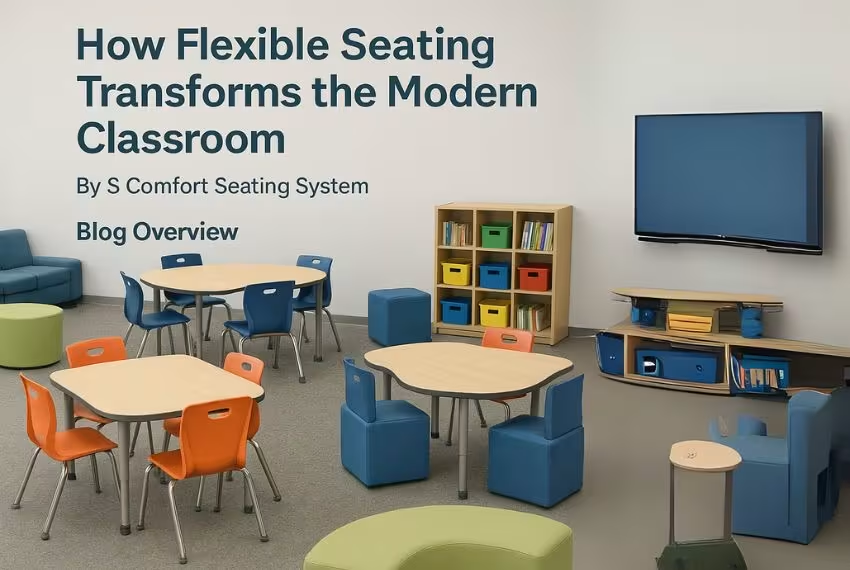
How Flexible Seating Transforms the Modern Classroom
By S Comfort Seating System
At S Comfort Seating System, we believe classroom furniture should go beyond offering a place to sit—it should empower students to focus, collaborate, and thrive. This article explores how flexible seating enhances learning environments by supporting comfort, mobility, and inclusive education.
Rethinking the Traditional Classroom
For decades, classrooms were organized in rigid rows with identical desks. While this traditional layout may seem efficient, it often fails to meet the dynamic learning needs of today’s students. Flexible seating disrupts this model by introducing variety, movement, and student choice.
“What if where students sit could change how they learn?”
This question lies at the heart of flexible seating design—emphasizing student-centered learning environments.
What Is Flexible Seating?
Flexible seating is a classroom setup where students choose from diverse furniture options—such as wobble stools, floor cushions, or standing desks—based on their tasks and comfort preferences. It introduces organized freedom while still maintaining structure and clear expectations.
Key Educational Models Supported:
- Student Agency
- Differentiated Instruction
- Universal Design for Learning (UDL)
Key Benefits of Flexible Seating
- Boosts Focus & Engagement: Movement-friendly options help reduce restlessness.
- Promotes Collaboration: Flexible layouts support group work and peer learning.
- Accommodates Learning Styles: Ideal for visual, auditory, and kinesthetic learners.
- Encourages Responsibility: Students learn decision-making and independence.
- Enhances Inclusivity: Supports various physical and emotional needs.
Popular Flexible Furniture Solutions
At S Comfort Seating System, we offer a range of ergonomic classroom furniture designed to support flexible learning:
- Wobble Stools & Active Chairs: Promote movement while seated.
- Floor Cushions & Bean Bags: Ideal for quiet reading zones.
- Standing Desks: Encourage better posture and alertness.
- Low Tables & Kneeling Seats: Offer posture variety and comfort.
- Portable Lap Desks: Mobile and convenient for flexible workspaces.
- Modular & Collaborative Tables: Easily reconfigurable for group tasks.
Real Classroom Success Stories
Across India, schools are seeing positive outcomes with flexible seating. For example, a Grade 5 class in Ahmedabad implemented modular seating:
“My students are more focused and less anxious.”
— Mrs. B., Primary School Teacher
“We’ve seen fewer behavioral issues and more teamwork.”
— Principal, Pune
Many schools start small—adding just a few new furniture pieces—and expand gradually.
Challenges & Considerations
- Set clear rules for seat selection and usage.
- Start with one zone or corner before full rollout.
- Ensure all students have accessible, comfortable options.
- Balance flexibility with classroom order and structure.
Conclusion: How to Get Started
Flexible seating is not a passing trend—it’s a transformational shift in how classrooms function. It improves student engagement, promotes wellness, and supports 21st-century learning.
Quick Start Tips:
- Create a flexible reading or quiet zone.
- Let students try different seating options.
- Look for CSR, PTA, or grant support for funding.
Let’s Redesign Learning—Together.
Contact S Comfort Seating System today for a free consultation or to request our classroom furniture catalog.


